
This post is part of our complete guide to Back Pain Treatment in Medical Lake & Spokane. Browse the guide for more in-depth information on treatments, exercises, and recovery strategies.
Lower Back Arthritis Chiropractic Treatment
Why lower back arthritis hurts (and why motion matters)
Arthritis in the lower back often involves wear-and-tear changes in the joints of the spine (including facet joints) and can be accompanied by stiffness, inflammation, and protective muscle tightness. Many people notice:
- Morning stiffness that eases as they “warm up”
- Pain after sitting too long
- Difficulty bending, standing up straight, or rotating comfortably
- Flare-ups that come and go
- Occasional nerve-type symptoms (tingling, burning, or referred pain)
One principle I lean on a lot is this: when spinal joints get “stuck” and stop moving well, your body often compensates by tightening muscles and sensitizing nerves. By improving joint motion in a controlled way, we’re often able to reduce the overall irritation loop.
Ready to feel better?
The team at Essential Health Group can help. Same-week appointments available in Medical Lake & Spokane.
My goal with arthritis chiropractic treatment
When I’m treating chronic lower back pain with arthritis involved, I’m not trying to “erase arthritis.” I’m focused on practical outcomes that matter in daily life, like:
- Reducing pain intensity and frequency
- Improving range of motion (bending, twisting, standing)
- Calming muscle guarding and spasms
- Supporting irritated nerves so they can settle down
- Helping you tolerate normal activities again (work, sleep, exercise, lifting)
And most importantly: I want the approach to be appropriate for you. Some people do great with traditional manual adjustments. Others need gentler techniques, especially when the joints are sensitive, stiff, or inflamed.
A case example: chronic lower back pain with significant arthritis
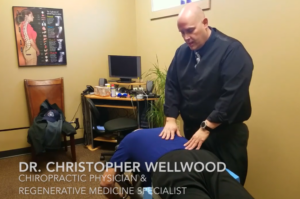
I recently worked with a younger man who had chronic lower back pain and “a lot of arthritis down there.” We had already been doing adjustments, and he was getting meaningful relief. To build on that progress, I used a technique that’s often a great fit when I want to improve spinal motion without forcing anything: Arthrostim.
During the session, I checked each area and asked him to tell me where it felt tender and when the discomfort started to fade. That feedback matters, because it helps me target the most restricted, irritated segments and confirm that the tissue is calming rather than getting aggravated.
What is Arthrostim (and why I use it for arthritic lower backs)
Arthrostim is an instrument that delivers rapid, controlled pulses to help a joint move. In plain English, it’s a way to encourage motion in vertebrae that are stuck—without the “twist and pop” feeling many people associate with chiropractic.
Here’s what people usually notice about Arthrostim:
- It’s gentle and typically well tolerated in sensitive areas
- No big popping sensation is required (many people prefer this)
- It’s specific: I can work level by level and side by side
- It supports motion, and improved motion often correlates with less pain
In the session I’m describing, I applied Arthrostim over individual vertebrae and listened to his response in real time. When he reported that an area felt “much better,” I moved to the next level. When he said “hold it there,” I stayed until the discomfort started to dissipate.
Why I work vertebra-by-vertebra (instead of “all at once”)
One detail that matters—especially with arthritis—is that spinal segments don’t all behave the same. One level may be stiff, another may be moving too much, and another may be irritated because it’s compensating.
When I’m doing arthritis chiropractic treatment, I’m often thinking in terms of quality of motion, not just getting a single big adjustment. That’s why I may:
- Target one vertebra at a time to restore more balanced movement
- Change the contact slightly to influence two nearby segments differently
- Re-check tenderness and stiffness repeatedly as we go
This is also how I aim for longer-lasting relief: I want each vertebra to move more appropriately in all needed directions, rather than temporarily “freeing up” one spot while another remains locked down.
“No popping” vs. light manual mobilizations
People sometimes assume it’s either instrument work or cracking. In reality, I often combine methods based on what your body is telling me.
After Arthrostim, I may add very light manual mobilizations in the lower back—especially if I feel an area is still restricted or if there’s a notable “lump” or tension pattern in the tissues. These mobilizations are typically gentle and controlled. Sometimes you’ll hear a small pop, sometimes not. Either way, the goal is improved motion and reduced guarding, not noise.
What is a percussor—and how it may help nerves, muscles, and joints
Another tool I sometimes use is a percussor. It’s not the same as a side-to-side vibrating device. A percussor delivers more of an up-and-down mechanical input, and I use it to help:
- Relax tight, protective muscles in the lower back
- Encourage the spine to hold the improved motion we just created
- Support irritated nerves (some people notice tingling or a “release” sensation)
A common response after this kind of work is that people feel “light and airy,” and some even describe it like they’re floating a bit when we stop. In my experience, that’s often a sign the nervous system is calming down and the body is shifting out of a guarded pain state.
In the case example, the patient reported tingling in his feet during care, which can be a positive sign that we’re influencing nerve function and reducing restriction—though I always interpret nerve symptoms carefully and in context.
How quickly can lower back arthritis improve?
This varies a lot. Arthritis-related pain can be stubborn, but improvements are absolutely possible—especially when we focus on restoring motion, reducing irritation, and improving how you load your spine day to day.
In the example above, the patient was on his fifth treatment and reported he was about 60% improved over a couple of months. That’s the kind of progress I like to see: steady, measurable change that holds.
One important point: I often think in terms of distance, not a single “miracle session.” With chronic conditions, I’d rather see consistent gains that last than short-term changes that flare right back up.
What a typical visit may look like (step-by-step)
If you come in with chronic lower back pain and arthritis, here’s a common flow I may use, depending on your exam findings and comfort level:
- Assessment and re-checks: I identify tender/stiff segments and track how they respond during treatment.
- Gentle motion work (often Arthrostim): I work level-by-level to encourage more normal movement without over-stressing the area.
- Light manual mobilization: If appropriate, I add controlled hands-on work to improve joint mechanics.
- Soft-tissue / percussor support: I help calm muscles and reduce nerve irritation to improve carryover.
- Quick reassessment: We confirm what changed—pain, stiffness, movement, and how you feel standing/walking.
Not everyone needs every step every time. I tailor the approach to what your body tolerates and what produces the best response.
Is this safe for arthritis?
For many people, chiropractic care can be a helpful conservative option for lower back arthritis, especially when the technique is matched to the person. Gentler approaches like Arthrostim and light mobilization are commonly used when I want to avoid excessive force.
That said, safety always depends on your full health picture. If you have symptoms like worsening numbness, significant weakness, changes in bowel/bladder function, fever, unexplained weight loss, recent major trauma, or a history of fracture/osteoporosis risk, you should be evaluated promptly and may need additional medical workup.
What you can do between visits to help your lower back
Even the best in-office arthritis chiropractic treatment works better when your daily habits support your spine. Here are a few practical strategies many of my patients benefit from:
- Keep moving gently: short walks often beat long periods of sitting.
- Use heat strategically: heat can reduce stiffness before activity (ice may help after flare-ups).
- Change positions often: avoid staying in one posture for too long.
- Build basic core and hip strength: stability can reduce stress on arthritic segments.
- Lift smarter: hinge at hips, avoid twisting under load.
Key Takeaways
- Arthritis chiropractic treatment is often about improving comfortable motion in the lower back so pain and guarding can decrease.
- Arthrostim is a gentle, instrument-assisted technique that can help move restricted vertebrae without requiring a strong popping adjustment.
- I frequently work vertebra-by-vertebra to target what’s actually restricted and to aim for longer-lasting relief.
- Supportive tools like a percussor and light mobilization can help calm muscles and reduce nerve irritation.
- Chronic lower back arthritis often improves best with steady progress over time, not just one intense treatment.
Where to Go From Here
If you’re dealing with ongoing lower back pain and you’re ready for a plan that’s tailored to your body, schedule an appointment now. I’ll assess what’s driving your symptoms, explain the approach I recommend (including gentle options like Arthrostim), and track your progress so you can see real change over time. The sooner we get the joints moving and the nerves calming down, the sooner you can get back to doing everyday life with more comfort.
Ready to feel better?
Our team at Essential Health Group in Medical Lake & Spokane is here to help. Same-week appointments available.

Dr. Christopher Wellwood, ARNP, NP-C, DC
Dr. Christopher Wellwood is a dual Board Certified Chiropractic Physician and Family Nurse Practitioner — a combination that puts him in a category of his own. His Doctorate in Chiropractic comes from the University of Western States, and his Master of Science in Nursing, Family Nurse Practitioner from Purdue University.
His clinical focus spans physical medicine, regenerative injection therapy (prolotherapy, PRP, stem cell, ozone), interventional pain management, functional neurology, and primary care. He is a published author in scientific journals — his research on adrenal and thyroid disease treatment is indexed in the Library of Medicine — and served as a Clinical Research Specialist at the Center for Health Research, contributing to the Premier Blood Pressure Study.
Dr. Wellwood believes the body has the ability to heal itself when given the right conditions. His approach addresses root causes rather than symptoms, combining conservative physical medicine with regenerative therapies to help patients recover, adapt, and thrive.
Further Reading: Back Pain
- Stay Active with Low Back Pain
- Medical Lake Pain Management – All Under One Roof
- The 5 Surprising Health Issues Tied to Spinal Misalignment
- Physical Therapy for Lower Back Pain
- Revolutionary Breakthrough: Regenerative Medicine Transforms Healthcare
→ Complete Guide: Back Pain Treatment in Medical Lake & Spokane