
How to Prevent ACL Injury: Proven Strategies for Stronger, Safer Knees
An anterior cruciate ligament (ACL) injury can be devastating—especially for athletes and active individuals. Each year, over 250,000 people in the U.S. tear their ACL, one of the four key ligaments that connect the femur to the tibia. This ligament stabilizes the knee during pivoting, twisting, and sudden directional changes, which is why sports like basketball, soccer, football, volleyball, and skiing come with higher risks.
If you’ve ever wondered how to prevent ACL injury, the good news is that prevention is possible. With the right balance of strength, movement training, and recovery, you can significantly lower your odds of experiencing a tear. At Natural Health Center of Medical Lake, we specialize in helping patients build resilience and restore movement so they can stay active safely.
1. Exercise All Year Round
Consistent, well-rounded exercise is one of the most effective strategies for preventing ACL injuries. The key is to keep the muscles around your knees strong, flexible, and balanced.
- Strength Training: Aim for two to three lower-body strength sessions per week. Exercises like squats, lunges, and step-ups build the quadriceps and glutes, which stabilize the knee.
- Mobility Work: Tight hips and ankles can disrupt alignment and increase strain on the knee. Daily mobility exercises improve flexibility and balance.
- Low-Impact Cardio: Activities like swimming, cycling, and elliptical training build endurance without overstressing the joints.
When developing a routine, think year-round—not just pre-season. Continuous training keeps your muscles adaptable to the unpredictable movements of real-life activity and sport.
2. Focus on Movement Quality
Learning how to prevent ACL injury isn’t just about getting stronger—it’s about moving smarter. Faulty mechanics when landing, cutting, or changing direction can place tremendous stress on the ACL.
Key movement tips:
- Land softly with knees and hips bent to absorb force.
- Keep your knees aligned over your toes during pivots and landings.
- Strengthen your glutes, core, and hamstrings to improve control and reduce inward knee collapse.
Incorporate drills that emphasize proper landing and cutting technique at slower speeds first. Over time, your neuromuscular system will learn these patterns, making safe movement second nature—even under fatigue or game-day pressure.
3. Manage Fatigue to Protect Your Knees
Even the best athletes are vulnerable to injury when fatigued. Exhaustion reduces coordination, reaction time, and muscle control—creating the perfect storm for an ACL tear.
- Prioritize sleep for recovery and tissue repair.
- Monitor training loads to prevent overuse.
- Rest when technique begins to falter.
Active recovery days with light cardio or mobility work can help maintain progress without overtaxing the body. Listen to your body’s signals; pushing through fatigue often leads to poor form and unnecessary injury risk.
4. Strengthen Your Hamstrings and Quadriceps
Balanced thigh strength is one of the cornerstones of how to prevent ACL injury. The quadriceps straighten the knee, while the hamstrings control its backward movement—together they stabilize the joint.
- Romanian Deadlifts (RDLs): Build hamstring and glute strength.
- Nordic Hamstring Curls: Enhance eccentric control and injury resistance.
- Split Squats and Lunges: Improve single-leg stability.
Progress slowly, emphasizing controlled movements to strengthen not just muscle fibers but also tendons and connective tissue. Strong hamstrings, in particular, help counteract forward movement of the tibia, which reduces strain on the ACL.
5. Don’t Forget Core Stability
A strong, stable core is your foundation for proper movement and injury prevention. Weakness in the core can cause misalignment in the knees during jumps, landings, or cuts.
- Planks and Side Planks: Build static endurance.
- Anti-Rotation Presses (Pallof Press): Improve dynamic stability.
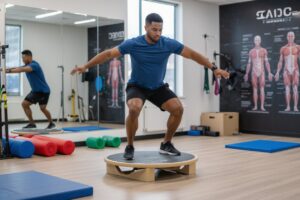
- Balance Drills: Try single-leg RDLs or wobble board exercises to enhance proprioception and control.
When your trunk is stable, your hips and knees can move in harmony—keeping you balanced, powerful, and protected from sudden torque that could damage the ACL.
Additional Prevention Tips
- Warm Up Dynamically: Begin every workout or game with 10–15 minutes of dynamic movement to prepare joints and muscles.
- Include Plyometric Training: Incorporate controlled jumping drills that focus on soft, balanced landings.
- Wear Proper Footwear: Choose shoes suited to your sport and surface.
- Incorporate Neuromuscular Training: Structured programs that train balance and coordination can significantly lower ACL injury rates.
Professional Support for ACL Injury Prevention
At Natural Health Center of Medical Lake, we take a comprehensive, patient-centered approach to injury prevention and recovery. Our state-of-the-art physical therapy and rehabilitation center specializes in sports injuries, functional movement training, and regenerative medicine.
If you’ve experienced knee pain, instability, or suspect an ACL injury, our team can help with:
- Physical Therapy & Movement Retraining
- Chiropractic Care for Joint Alignment
- Massage Therapy for Recovery & Circulation
- Regenerative Medicine (PRP, prolotherapy, ozone therapy)
- Pain-Relief Injections & Rehabilitation Programs
We’ll assess your movement, identify risk factors, and design a customized prevention or recovery plan to restore confidence and performance.
Take Action Today
Don’t wait until injury sidelines you. Learn how to prevent ACL injury the right way—with expert guidance and proven science.
👉 Call (509) 299-6900 or visit spokanepainfree.com to schedule your ACL prevention and performance consultation today!
Frequently Asked Questions
1. How long does it take to strengthen the knee for ACL injury prevention?
With consistent training, noticeable improvements in knee stability and strength typically occur within 6–8 weeks. Long-term maintenance ensures continued protection.
2. Are ACL injuries more common in women?
Yes. Due to anatomical and hormonal differences, women are more prone to ACL injuries—but targeted strength and neuromuscular training can significantly reduce this risk.
3. Can physical therapy really help prevent an ACL tear?
Absolutely. Physical therapists specialize in correcting movement mechanics, strengthening key stabilizers, and retraining your neuromuscular system—making therapy one of the most effective tools for ACL injury prevention.