
This post is part of our complete guide to Knee Pain Treatment in Medical Lake & Spokane. Browse the guide for more in-depth information on treatments, exercises, and recovery strategies.
Knee Pain Treatment in Spokane
Knee pain treatment in Spokane works best when we match the right diagnosis to the right combination of care—so we’re not just chasing symptoms, we’re addressing the real source of pain and dysfunction. At Essential Health Group (formerly Natural Health Center of Medical Lake), we coordinate family medicine, physical therapy, chiropractic, massage, and regenerative medicine in one plan to help you move more comfortably and confidently.
Why knee pain can be tricky (and why a coordinated plan matters)
Knee pain often looks “simple” on the surface—pain with stairs, swelling after activity, a sharp twinge when you turn—but the knee is influenced by the hips, ankles, feet, posture, training habits, and even old injuries. If we only treat the painful spot, it’s easy to miss what’s actually causing the overload.
That’s why we approach knee pain treatment in Spokane with coordination. At Essential Health Group, we’re an integrated clinic: multiple services, one location, one care plan. Our providers communicate directly so your care is consistent and efficient.
Ready to feel better?
The team at Essential Health Group can help. Same-week appointments available in Medical Lake & Spokane.
Common causes we see with knee pain treatment in Spokane
Different knee problems can feel similar. A good plan starts with understanding which tissues are irritated and why.
- Osteoarthritis (wear-and-tear changes): stiffness, swelling, achy pain, reduced range of motion—often worse after sitting or later in the day.
- Meniscus irritation or tear: joint-line pain, clicking/catching, pain with twisting or deep bending.
- Patellofemoral pain (kneecap tracking issues): pain with stairs, hills, squats, or prolonged sitting; often related to hip/quad strength and mechanics.
- Tendinopathy (patellar tendon or quad tendon): localized pain with jumping, running, or loading; can be stubborn without progressive strengthening.
- IT band–related pain: pain on the outside of the knee, commonly in runners; often connected to hip control and training load.
- Ligament sprains (ACL/PCL/MCL/LCL): instability, swelling, pain after a specific incident.
- Bursitis: swelling and tenderness over specific bursa areas, often from kneeling or repetitive friction.
- Referred pain: hip, low back, or foot mechanics can make the knee hurt even when the knee isn’t the primary problem.
Many people in Spokane also deal with lifestyle and activity factors—seasonal sports, yard work, hiking, skiing, long commutes, or jobs that require standing, lifting, or kneeling—that can keep a knee problem smoldering.
When you should get evaluated (and when it’s urgent)
Some knee pain improves with basic rest and smart activity modification. But if symptoms linger, it’s worth getting a clear plan—especially if you’ve already tried “waiting it out.”
Consider scheduling an evaluation if you notice:
- Pain that lasts more than 1–2 weeks without clear improvement
- Swelling that repeatedly returns after activity
- Difficulty with stairs, squatting, or getting up from a chair
- A feeling of giving way, catching, or locking
- Reduced range of motion or persistent stiffness
Seek urgent care or same-day medical evaluation if you have:
- Inability to bear weight after an injury
- Major swelling soon after trauma
- Visible deformity
- Fever, redness, warmth, and severe pain (possible infection or inflammatory flare)
- Calf swelling/pain with shortness of breath (possible clot—emergency)
Our evaluation approach: how we decide what will help
Effective knee pain treatment in Spokane starts with clarity. We don’t want you bouncing between offices repeating your story. In our integrated model, we can coordinate the right next step—whether that’s physical therapy, hands-on care, medical evaluation, or a combined plan.
In most knee evaluations, we’ll look at:
- Your story: what triggered the pain, what makes it better/worse, your activity goals
- Movement patterns: walking, squatting, stair mechanics, balance and control
- Joint range of motion: knee, hip, ankle mobility
- Strength and endurance: quads, glutes, hamstrings, calves, and core stability
- Tissue sensitivity: tendons, joint line, patellar tracking, soft tissues
- Whole-body contributors: low back/hip involvement, foot/ankle mechanics, footwear, training load
When appropriate, our family medicine and clinical team can help determine if additional medical workup is needed, and our coordinated care approach keeps your plan aligned.
What “integrated care” means at Essential Health Group
At Essential Health Group, we’ve built care around a simple idea: the body has the ability to heal itself when given the right support. Our role is to remove obstacles to recovery and guide the right progression—without guessing.
Because we bring multiple disciplines together under one roof, we can combine therapies that work better together than alone:
- Physical Therapy & Sports Recovery for strength, mobility, gait retraining, and return-to-activity planning
- Chiropractic care to address mechanical contributors (often in the spine, hips, pelvis, or ankle) that change knee loading
- Massage therapy to calm irritated tissues, improve tolerance to movement, and support recovery between training sessions
- Regenerative medicine options when appropriate as part of a broader plan (not as a stand-alone “magic fix”)
- Primary care & family medicine to evaluate red flags, manage inflammation thoughtfully, and coordinate overall health factors that affect healing
This integrated setup matters for knee pain treatment in Spokane because knee pain is rarely just a “knee-only” problem. Coordinated communication helps us move faster, avoid duplicated steps, and keep your plan consistent.
Conservative care first: what we usually start with
Most knee pain improves with a well-structured conservative plan. Even when imaging shows “wear and tear,” many people build resilience and reduce pain significantly with the right progression.
1) Activity modification (without stopping your life)
We aim for smart adjustments rather than total shutdown. That might include:
- Temporarily reducing hills, stairs, deep squats, or impact activities
- Switching to lower-impact cardio (bike, elliptical, pool) while symptoms calm down
- Using a step count or pain scale to keep activity in a “recoverable” zone
2) Targeted strengthening and mechanics
For many cases, the knee is overloaded because the body can’t distribute forces well. Physical therapy focuses on building capacity where it matters most.
Programs often include:
- Quadriceps strength (especially controlled loading)
- Glute strength and hip control (often essential for kneecap and IT band issues)
- Hamstring and calf strength for balanced support
- Balance/proprioception to restore stability and confidence
- Mobility work for ankle, hip, and knee as needed
3) Hands-on care to reduce irritation and improve motion
When pain is high, movement is limited, or tissues are very sensitive, hands-on support can help you tolerate the strengthening that actually produces long-term change.
- Massage therapy for muscle tone, trigger points, and recovery support
- Joint and soft-tissue techniques to help restore comfortable motion
- Chiropractic-based mechanical assessment and treatment when spine/hip/ankle mechanics are influencing knee load
4) Education you can apply at home
We want you to understand what’s happening and why. Clear guidance usually includes:
- How to tell the difference between “safe soreness” and “too much”
- How to progress walking, running, or gym work without flare-ups
- Simple strategies for swelling and symptom management
A practical step-by-step plan we often use
If you’re not sure what a knee recovery plan should look like, here’s a general pathway we commonly follow for knee pain treatment in Spokane. Your plan will vary based on your diagnosis and goals, but the structure tends to hold up well.
- Calm the flare: reduce provocative load, manage swelling/irritation, restore basic motion.
- Rebuild capacity: progressive strengthening of quads, glutes, and supporting musculature; improve control.
- Retrain movement: gait, stairs, squat/hinge mechanics, and sport-specific patterns.
- Return to activity: gradual reintroduction to running, hiking, work demands, or sport with a clear progression.
- Maintain and prevent: a simple ongoing plan that fits your schedule and keeps your knee resilient.
Regenerative medicine: where it may fit (and where it doesn’t)
Regenerative medicine is an area of growing interest, especially for arthritic knee pain and stubborn tendon problems. The most important point is that regenerative therapies are not a replacement for movement-based rehab—they’re often most helpful when paired with it.
When we discuss regenerative options, we focus on:
- Appropriateness: is your condition a good match for regenerative care?
- Timing: is this the right stage, or should we first build strength and improve mechanics?
- Integration: how will this work alongside physical therapy, chiropractic care, and recovery strategies?
Our goal is to give you a realistic plan, clear expectations, and coordinated follow-through.
What makes knee pain keep coming back?
Recurrent knee pain is common, and it’s usually not because you “did something wrong.” More often, it’s because the underlying contributors never got fully addressed. In our experience, the most common reasons include:
- Load spikes: doing “too much too soon” (weekend warrior effect)
- Strength gaps: especially quads and hip stabilizers
- Limited ankle or hip mobility: the knee takes the stress when other joints don’t move well
- Technique issues: running form, squat mechanics, work positions, or sport patterns
- Recovery deficits: poor sleep, high stress, not enough tissue recovery time
- Incomplete rehab after injury: pain decreases but stability and capacity don’t fully return
This is one reason people appreciate an integrated clinic like Essential Health Group: we can look at the knee, the body around it, and the lifestyle factors that influence healing—without fragmenting your care.
At-home tips that support knee pain treatment in Spokane
We love clinic care, but what you do between visits matters. Here are practical, generally safe strategies that often help (and we’ll personalize these based on your exam).
Helpful habits
- Stay moving within tolerance: frequent short walks can beat one long, painful push.
- Use a “24-hour rule”: if your knee is significantly worse the next day, we adjust load down.
- Prioritize strength 2–3 days/week: consistent, progressive work beats occasional intense workouts.
- Warm up before activity: 5–10 minutes of easy movement and light range-of-motion work.
- Support recovery: hydration, protein intake, and sleep all influence tissue repair.
What to avoid (most of the time)
- Complete rest for long periods: it often increases stiffness and reduces capacity.
- “Random” exercises from the internet: great info exists, but mismatched drills can flare the wrong tissue.
- Pushing through sharp pain: discomfort during rehab can be normal; sharp or escalating pain is a signal to adjust.
What results should you expect—and how long does it take?
Timelines depend on the cause and how long the problem has been present. A mild overload issue might improve in weeks; a chronic tendinopathy or arthritic flare may require a longer, more strategic plan.
In general, with consistent care and smart progression, many people notice:
- Early wins (often 1–3 weeks): less irritation, improved confidence, better daily tolerance
- Capacity gains (often 4–8+ weeks): better stair comfort, improved walking endurance, stronger squat mechanics
- Return-to-activity improvements (often 8–12+ weeks): improved tolerance for hiking, running, sport, and higher loads
Our goal with knee pain treatment in Spokane is to help you make steady progress with fewer setbacks—and to make sure your plan fits your real life.
How we tailor knee pain treatment in Spokane to different people
Knee pain doesn’t happen in a vacuum. We tailor care based on your goals, schedule, and health picture.
- Active adults and athletes: return-to-sport progressions, strength benchmarks, mechanics work, and recovery strategies.
- Busy parents and professionals: efficient home programs, pain control strategies, and “minimum effective dose” rehab.
- Older adults: joint-friendly strengthening, balance training, and support for arthritis-related stiffness.
- Physically demanding jobs: lifting, kneeling, climbing, and shift-based plans that match your work reality.
Because our clinic includes family medicine, physical therapy, chiropractic, massage, regenerative medicine, and psychiatric services, we can also support the stress, sleep, and mood factors that often influence pain sensitivity and recovery.
Key Takeaways
- Knee pain treatment in Spokane is most effective when we identify the true driver of pain—not just the painful spot.
- Common causes include arthritis, meniscus irritation, kneecap tracking issues, tendinopathy, IT band overload, ligament sprains, bursitis, and referred pain.
- Most knee conditions improve with a conservative plan that combines activity modification, progressive strengthening, movement retraining, and hands-on care when appropriate.
- Integrated care at Essential Health Group helps keep your plan coordinated across PT, chiropractic, massage, regenerative medicine, and primary care.
- If pain persists beyond 1–2 weeks, keeps returning, or limits daily life, an evaluation can prevent months of trial-and-error.
Where to Go From Here
If you’re ready for a clear diagnosis and a coordinated plan, we can help. At Essential Health Group, we’ll connect the dots between your symptoms, your movement, and your goals so your knee pain treatment in Spokane actually moves forward.
Schedule an appointment today so we can identify what’s driving your knee pain and map out the right mix of physical therapy, hands-on care, and medical support. The sooner we get a plan in place, the sooner you can get back to the activities you enjoy with more comfort and confidence.
Frequently Asked Questions
What is the best first step for knee pain treatment in Spokane?
The best first step is a focused evaluation to identify the pain generator and the movement or load factors driving it. From there, a conservative plan typically includes activity modification, progressive strengthening, and movement retraining, with hands-on care as needed.
How do I know if my knee pain is arthritis or something else?
Arthritis often presents as stiffness, swelling, and an achy pain pattern that can worsen after sitting or later in the day, but other conditions can feel similar. A clinical exam looking at range of motion, strength, mechanics, and tissue sensitivity helps clarify the likely source and the best plan.
Do I need imaging like an X-ray or MRI for knee pain?
Not always. Many knee problems can be assessed clinically and improve with conservative care. Imaging may be considered when there is significant trauma, persistent swelling, instability, locking, severe functional limits, or when results would change the treatment plan.
How long does knee pain treatment usually take to work?
Some people notice improvements within 1–3 weeks, especially with reduced irritation and better movement strategies. Strength and capacity changes often take 4–8+ weeks, and return-to-sport or higher-demand activities commonly takes 8–12+ weeks depending on the condition.
Can physical therapy help even if my knee pain is from osteoarthritis?
Yes. Strengthening, mobility work, and movement retraining can reduce pain and improve function for many people with osteoarthritis. The goal is to build joint tolerance and improve how forces are distributed through the hips, knees, and ankles.
What does integrated care mean for knee pain treatment in Spokane?
Integrated care means your providers coordinate as one team using one care plan. At Essential Health Group, that can include physical therapy, chiropractic care, massage therapy, regenerative medicine, and family medicine working together to address both symptoms and root contributors.
Ready to feel better?
Our team at Essential Health Group in Medical Lake & Spokane is here to help. Same-week appointments available.
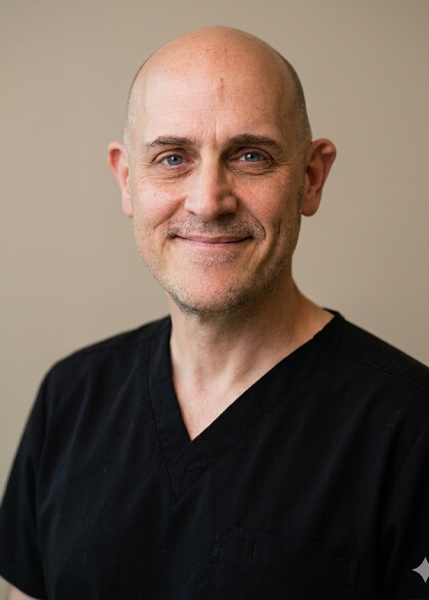
Dr. Christopher Wellwood, NP-C, MSN, DC, MS
Dr. Christopher Wellwood is a dual Board Certified Chiropractic Physician and Family Nurse Practitioner — a combination that puts him in a category of his own. His Doctorate in Chiropractic comes from the University of Western States, and his Master of Science in Nursing, Family Nurse Practitioner from Purdue University.
His clinical focus spans physical medicine, regenerative injection therapy (prolotherapy, PRP, stem cell, ozone), interventional pain management, functional neurology, and primary care. He is a published author in scientific journals — his research on adrenal and thyroid disease treatment is indexed in the Library of Medicine — and served as a Clinical Research Specialist at the Center for Health Research, contributing to the Premier Blood Pressure Study.
Dr. Wellwood believes the body has the ability to heal itself when given the right conditions. His approach addresses root causes rather than symptoms, combining conservative physical medicine with regenerative therapies to help patients recover, adapt, and thrive.
Originally spoken aloud by rastrichy. Edited with AI assistance and reviewed before publication.